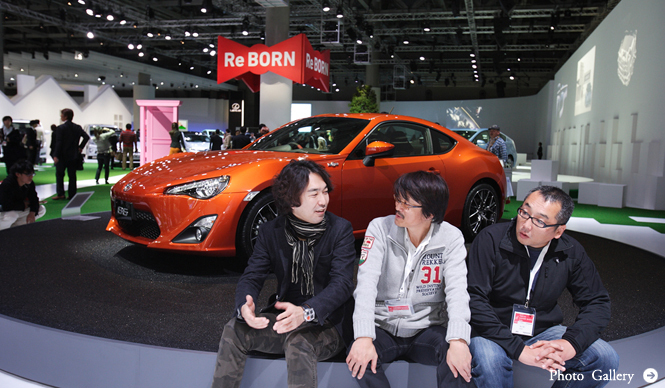
Was There a Future at the 2011 Tokyo Motor Show? (Part 1)
The 42nd TOKYO MOTOR SHOW 2011
Yasuhisa Shimashita, Toshifumi Watanabe, and Soichi Shimizu Weigh In
Did the Tokyo Motor Show 2011 Hold the Key to the Future? (Part 1)
The Tokyo Motor Show returned to Tokyo from Makuhari for the first time in 24 years. Although Italian and American manufacturers were absent, many overseas makers who had only sent two companies last time returned. Visitor numbers exceeded 300,000 over the three days from December 3rd, the first day for the general public, making it certain to significantly surpass the 614,400 from the last show in Makuhari. While there were few world premieres, next-generation vehicles were showcased in abundance, expressing the future direction of Japanese motorization. How did these keen automotive journalists view the Tokyo Motor Show? We welcome back our familiar duo, Yasuhisa Shimashita and Toshifumi Watanabe, and this time, the founder of the "Great Vehicle Ferrari Cult," Soichi Shimizu, joins us for the first time. They will dissect the present and future of the automotive world.
Text by Dai MatsuoPhotos by Masayuki Arakawa
Let's Embrace the "Galapagos Show"
──What are your impressions of this motor show?
WatanabeCompared to the last one, I'd say it's a world of difference for the better, wouldn't you agree? I don't know about visitor numbers, but there are more exhibiting vehicles, and foreign manufacturers have returned. The previous show was such a low point that this one, in comparison, actually resembles a motor show.
──An importer expressed concern, fearing that the overall show might not appear energetic enough due to the presence of VIPs from their home countries visiting Japan.
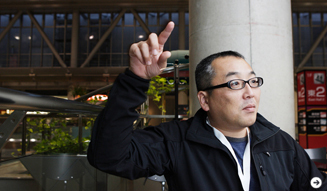
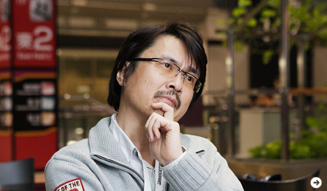
ShimizuI agree. I think we should push for it to become a "Galapagos Show." Japanese eco-cars are Galapagos-like, so there's no need to conform to international standards. The "low-speed road environment" is unique to Japan, especially Tokyo, and completely different from Europe and America. However, I do feel that developing countries will have conditions relatively similar to Japan. Therefore, this Galapagos Show might eventually become the growth engine for the global automotive industry. So, I hope they continue with this stance. As for imported cars, the absence of Ferraris and Lamborghinis means it lacks glamour, I suppose.
WatanabeThe lack of Ferraris and Lamborghinis is like a film festival without Hollywood stars, isn't it?
ShimizuI think this show is a good opportunity to take a close look at Japanese eco-cars. As an eco-car critic, I find it excellent that all available powertrains for eco-cars are represented. Diesels are finally appearing too. While they may seem understated, in a sense, it's a vibrant display of diversity.
ShimashitaI also believe it would be better to decide whether it's an international show or a Galapagos show. While they probably still want it to be an international show, the presentations feel half-hearted, with some booths still only displaying information in Japanese. The Doraemon at the Toyota booth is also an example. Of course, I understand it's not a character used solely for this show, but it won't resonate globally. It might be fine if it's just for Japanese visitors. Connecting to what Mr. Shimizu just said, I used to think of Japan as Galapagos, but I'm starting to feel that German cars are the real Galapagos. Compared to emerging Asian countries, Japanese technology is dazzling and can be readily exported. Therefore, I think it would be beneficial to be a bit more accessible to them. While Chinese might not be necessary, explanations in globally understood languages would be good.

It might be fine if it's just for Japanese customers. As Mr. Shimizu mentioned earlier, I used to think of Japan as Galapagos, but I'm starting to feel that German cars are the real Galapagos. Compared to emerging Asian countries, Japanese technology is dazzling and can be readily exported. Therefore, I think it would be beneficial to be a bit more accessible to them. While Chinese might not be necessary, explanations in globally understood languages would be good.
ShimizuA foreign journalist asked, "What's that Doraemon?" and I passionately defended it.
ShimashitaI felt the same way about the 86 (Hachi-Roku). Chinese people might know about "Initial D," but the name 86 signifies more than just that. Do they not need the old image and explanation of the 86? It seems it will be called "GT-86" in Europe. In America, it will be released as the FR-S from Scion. Chinese people might understand, but Caucasians won't. There's no explanation from the concept stage. So, they won't understand the roots of the word 86 or anything.
The 42nd TOKYO MOTOR SHOW 2011
Yasuhisa Shimashita, Toshifumi Watanabe, and Soichi Shimizu Weigh In
Did the Tokyo Motor Show 2011 Hold the Key to the Future? (Part 1) (2)
Mazda: A Beacon of Hope
──Were there any imported cars that left a particular impression on you?
WatanabeTo be honest, nothing particularly stood out. Most of them were already on the market. The only real news in terms of world premieres was perhaps the Cross Coupé from VW.
ShimashitaEven the BMW ActiveHybrid 5 and the AUDI A1 Sportback, while world premieres, are derivative models.
WatanabeReturning to the overall picture, I don't think the Tokyo Motor Show is a place to sell products anymore. It needs to convey culture and information, primarily to Asia. We need to make people want to see Tokyo, want to come to Tokyo. We have to foster a situation where "what gains attention in Tokyo gains attention in the Asian market." In that sense, what's important isn't direct product world premieres, but vision. The Mercedes F125!, which was also shown at the Frankfurt Motor Show, is an example of the kind of presentations about the near future – five or ten years ahead – that would be beneficial for the Tokyo Motor Show.
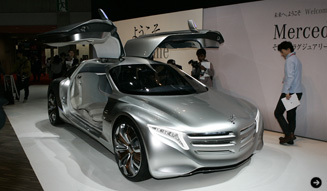
Japanese manufacturers had quite a few such exhibits. There were also two-seater commuters, EVs, and FCVs, reminiscent of the Smart. For imported car manufacturers, the value of exhibiting at the Tokyo Motor Show lies in it being a good showcase for environmental and advanced transportation technologies. If it can be a place where the latest technologies garner attention, can be disseminated, and information gathered, then it's worthwhile. This was somewhat achieved this time.
ShimizuIn the past, the imported car booths at the Tokyo Motor Show displayed every imported car available in Japan, allowing for a comparison of their auras on the same stage. Ferraris were roped off, creating an untouchable atmosphere. That disappeared two years ago, and only about half have returned this year. This undermines the show's function as a desire-stimulating device. Consequently, it's no longer a destination to see imported cars. One can only come to see specific models like the DS5 or the new 911. Therefore, the presence of imported cars feels like mere decoration.
ShimashitaImported cars were indeed scarce. However, Mercedes' booth had an interesting initiative where bringing your smartphone would allow you to receive car information embedded in the in-car music. Information was delivered as you approached each vehicle. Such an attempt was commendable. It offered a new way to enjoy the show. Even without new car reveals, it could serve as a testing ground. German manufacturers are aware of the growing car-aversion in urban areas of developed countries and view Japan as a model case. This might be an experiment for how to approach the motor show in such a context. There were no particular world premieres to see. The BMW i was an Asian premiere, but its debut not being in China suggests they might have been looking for reactions from Japan. Regarding hybrids, it seems all manufacturers recognize the need for them to be accepted by Japanese users first.
ShimizuJapan is a super-advanced hybrid nation, but the demand in Europe is almost zero.
ShimashitaHowever, as megacities expand in Europe, hybrids will clearly have an advantage over diesels in large cities. Even with 7 or 8 lanes, Moscow experiences massive traffic jams. London is also terrible. Cities are becoming like Tokyo.
WatanabeTokyo is such a massive megacity, unparalleled in the world, that if a megacity vehicle concept and its utility can be established here, it's said to be viable almost anywhere.
ShimashitaTherefore, even if we're manufacturing in "Galapagos Japan," as Mr. Shimizu mentioned, the rest of the world will eventually follow. However, the crucial part is effective communication, which Japan struggles with. They should be confident in their excellent Japanese-origin content.
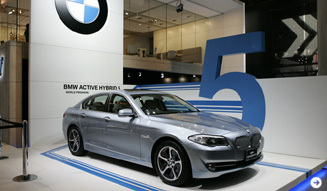
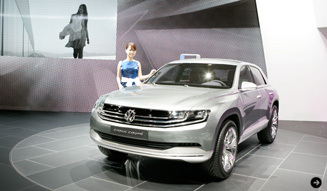
WatanabeHowever, the frightening aspect is that European manufacturers have all options available except for hybrids. In Japan, diesels are only just starting to appear next year. Furthermore, in Europe, they are working on improving the efficiency of pure gasoline engines, but in Japan, only Mazda seems to be doing so.
ShimashitaRegarding diesels, when transitioning from the existing Euro 5 to Euro 6 standards, there's a significant drop in power. Mazda's SKYACTIV-D, introduced at this point, has the potential to lead in terms of product appeal.
ShimizuIt's a beacon of hope.
WatanabeFor a diesel, the engine feel is remarkably good. It revs up smoothly.
ShimashitaPeople in Southern Europe would probably like it. It revs like an Alfa Romeo diesel.
ShimizuIf they put a diesel in the Atenza, I'd seriously consider buying it as an eco-car critic. Also, the TAKERI concept is excellent.
WatanabeIt's a design that appeals to the male ego.
The 42nd TOKYO MOTOR SHOW 2011
Yasuhisa Shimashita, Toshifumi Watanabe, and Soichi Shimizu Weigh In
Did the Tokyo Motor Show 2011 Hold the Key to the Future? (Part 1) (3)
Japan's Situation is Too Advanced
ShimashitaChanging the subject, if the Tokyo Motor Show's ideal form is to be a venue for showcasing such things, then the fact that almost all manufacturers presented two-seater compact EVs, as Mr. Watanabe mentioned earlier, reflects Japan's pressing transportation and social conditions. Beyond megacities, for the elderly in depopulated areas, even kei cars are unnecessarily large for daily transportation. Yet, senior cars don't offer protection from the elements, can't carry passengers or luggage, and raise safety concerns. They proposed a solution in between. In terms of showcasing future mobility, Japanese manufacturers have succeeded. I hope overseas manufacturers will be inspired by this.
ShimizuThe regrettable part is that Japan's situation has advanced too far. It's a country where enthusiasm for cars is the lowest in the world, the population is aging, there's an extreme focus on eco-cars, and the situation is quite detached from other countries.
ShimashitaEven we journalists, upon seeing these two-seater compact EVs, might wonder who would drive them. However, they address a real need, and they are convenient whether in Tokyo or in rural areas.
WatanabeI understand the packaging and functionality. However, I find them completely unappealing. But I suppose there are people with different values than us journalists.
ShimashitaI can't comprehend the exterior designs, which resemble fancy trinkets.
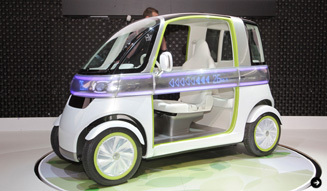
Daihatsu Pico
ShimizuAs the eldest among us, I'll be 60 in ten years. I wonder if I'll be driving one then. Perhaps a trip to a hot spring for a day in a small EV from Daihatsu, with just a bar for a door. No air conditioning, simple and inexpensive. It's not just a dream, but it's certainly ahead of its time.
ShimashitaPutting aside the appearance, every manufacturer believes these are necessary for Japan. The remaining challenge is presentation.
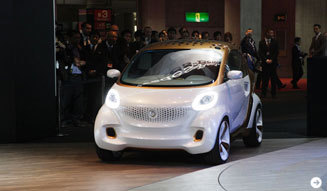
WatanabeThe Smart forvision is far more realistic. Germans wouldn't go that far. They would never display "Keep Distance" or "Speed Limit X" on the exterior where it's visible from outside. German engineers must be astonished. They likely see Japanese small cars as both amazing and terrible. And they probably feel a sense of crisis that they will eventually have to accept them. In the past, they might have scoffed at cup holders or power-folding mirrors, but now they are commonplace, and they are even creating more elaborate features. Japanese engineers undoubtedly lead in their sincerity towards customers. Well, that's partly a backhanded compliment.
ShimizuIf that's what the customers want.
WatanabeJapan is all about market-in. Germany is product-out.
ShimizuHowever, while it's market-in for Japan, it becomes product-out for overseas markets.
ShimashitaEven the 911 is starting to realize that power-folding door mirrors would be good, and they've begun incorporating them in new models.
WatanabeSo, will the 911 also display "Keep Distance" someday?
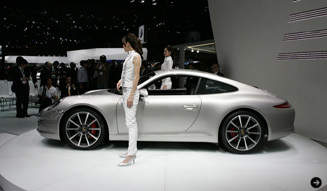
Porsche 911
< Profile >
Soichi Shimizu
Born in Tokyo in 1962. After graduating from Keio University's Faculty of Law, he joined Shueisha. After working in the "Weekly Playboy" editorial department, he became independent as a freelance writer. His representative work includes "Please Give Me That Ferrari!!," a series of humorous Ferrari essays, and automotive writings centered on love, fantasy, and market economics. He also works as a transportation journalist with works such as "Why Does the Metropolitan Expressway Get Congested!?" He has numerous magazine serializations and is a member of the Japan Writers' Association.
Yasuhisa Shimashita
Born in Kanagawa Prefecture in 1972. His writing spans not only driving performance but also advanced environmental and safety technologies, brand theory, driving, and all social phenomena surrounding automobiles, appearing in specialized magazines, men's magazines, and online. He was a judge for the 2011-2012 Car of the Year Japan. His recent publication is "2012 Edition: Cars Chosen Incorrectly" (co-authored with Aritsune Tokudaiji, published by Soshisha).
Blog "Blog Named Desire" http://minkara.carview.co.jp/userid/362328/blog/13360020/
Toshifumi Watanabe
Born in Fukuoka Prefecture in 1967. After working in the editorial departments of motorcycle and car magazines at Kikaku Shitsu Neko (now Neko Publishing), he became a freelancer. His serialization in "Shukan Bunshun," "Car Nabe," is a popular read among women for its vivid dissection of society and life through the lens of automobiles. In addition to automotive magazines, he also writes for many general interest magazines such as "MEN'S EX" and "UOMO," gaining popularity.